
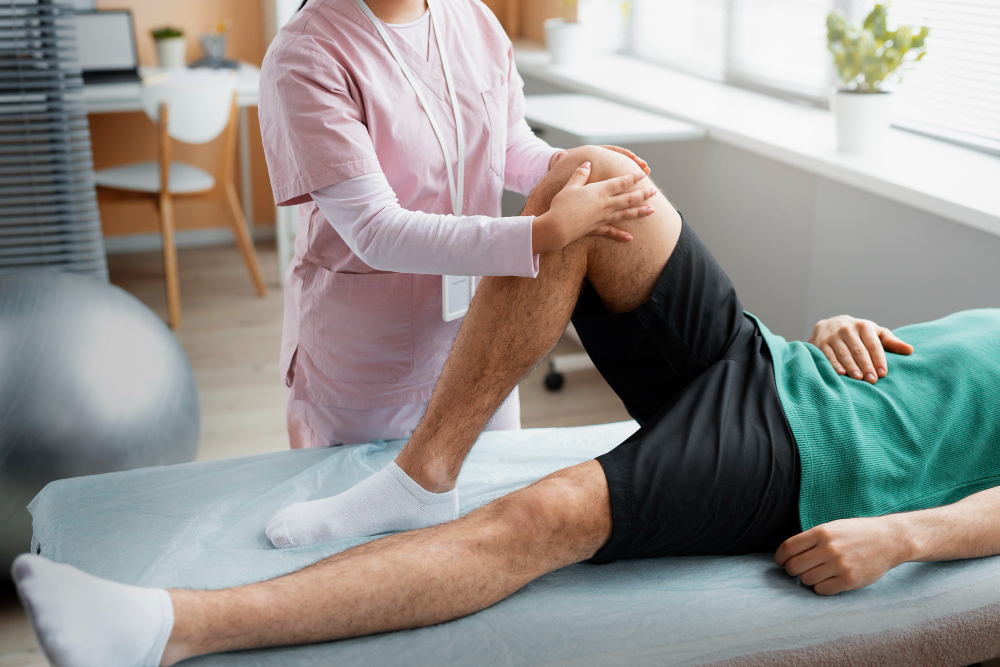
Knee pain physiotherapy helps people manage and reduce knee discomfort. It uses special exercises and treatments to improve movement and strength. Many people search for the best physiotherapy for knee pain because it can help avoid surgery and speed up recovery. Whether you have a recent injury or long-term pain, knee pain physiotherapy offers safe and proven solutions. In this blog, you will learn about causes, symptoms, treatments, and prevention tips. You will also find easy knee pain exercises at home and advice on when to see a physiotherapist.
What is Knee Pain Physiotherapy?
Knee pain physiotherapy is a treatment plan made by trained experts. It uses exercises, stretches, and hands-on care to reduce pain and improve knee function. Often, physiotherapists teach you how to move safely. They also help you build strength and flexibility. As a result, you can return to daily activities faster. Many clinics offer knee pain physiotherapy near me, making it easy to get help close to home.
Common Causes of Knee Pain
Knee pain can happen for many reasons. Sometimes, it starts after an injury. Other times, it develops slowly over time. For example, common causes include:
However, not all knee pain is the same. Therefore, a proper diagnosis is important before starting treatment.
Symptoms Addressed by Physiotherapy
Physiotherapy can help with many knee pain symptoms. For instance, you may notice:
Because these symptoms can affect daily life, early treatment is important.
Diagnosis and Assessment
First, a physiotherapist will ask about your symptoms and medical history. Next, they will check your knee’s movement, strength, and balance. Sometimes, they may use simple tests to find the cause of pain. In some cases, doctors may order X-rays or scans to rule out serious injuries. According to the CDC, early assessment helps prevent long-term problems and guides the best treatment plan.
Effective Physiotherapy Treatments
There are many ways physiotherapists treat knee pain. Some common treatments include:
Because every person is different, your treatment plan will be tailored to your needs. Many people find that the best physiotherapy for knee pain combines several of these methods.
Recommended Exercises for Knee Pain
Simple exercises can help reduce knee pain and prevent future injuries. For example, you can try these knee pain exercises at home:
However, always start slowly and stop if you feel sharp pain. For best results, ask your physiotherapist for a personalized exercise plan.
Lifestyle Tips and Prevention
There are many ways to protect your knees and avoid pain. Consider these tips for preventing knee injuries:
Because prevention is easier than treatment, these habits can help keep your knees healthy for years.
When to See a Physiotherapist
Sometimes, knee pain does not improve with rest or home care. In these cases, you should see a physiotherapist if you:
Early treatment can prevent further injury and speed up recovery. Many people search for knee pain physiotherapy near me to find local help quickly.
In summary, knee pain physiotherapy offers safe and effective ways to manage knee discomfort. With the right exercises and lifestyle changes, you can reduce pain and prevent injuries. Consult a qualified physiotherapist at VEDYA’S PHYSIO CARE for personalized knee pain management.