Knee ligament injuries can cause pain, swelling, and trouble moving your knee. These injuries often happen during sports or accidents. However, with the right care, most people recover well. Knee ligament injuries physiotherapy plays a key role in healing. In fact, physiotherapy for knee ligament injury recovery helps restore strength and movement. Rehabilitation after knee ligament tear is important for a safe return to daily life. Let’s explore how physiotherapy supports your recovery journey.
What Are Knee Ligament Injuries?
Knee ligaments are strong bands of tissue. They connect the bones in your knee and keep it stable. Sometimes, these ligaments stretch or tear. This is called a knee ligament injury. There are four main knee ligaments:
Each ligament helps your knee move and stay steady. When one is injured, your knee may feel weak or unstable. For this reason, early treatment is important.
Common Causes and Symptoms
Knee ligament injuries often happen during sports or falls. For example, sudden stops, twists, or direct hits can cause tears. But, anyone can get hurt, not just athletes. Some common causes include:
Symptoms can vary, but you may notice:
Because these symptoms can affect daily life, it is important to seek help quickly.
Diagnosis of Knee Ligament Injuries
Doctors use several steps to diagnose knee ligament injuries. First, they ask about how the injury happened. Next, they check your knee for swelling, pain, and movement. Sometimes, they may order tests, such as:
Early diagnosis helps guide the best treatment plan. According to the CDC, quick care can prevent further damage.
How Physiotherapy Supports Recovery
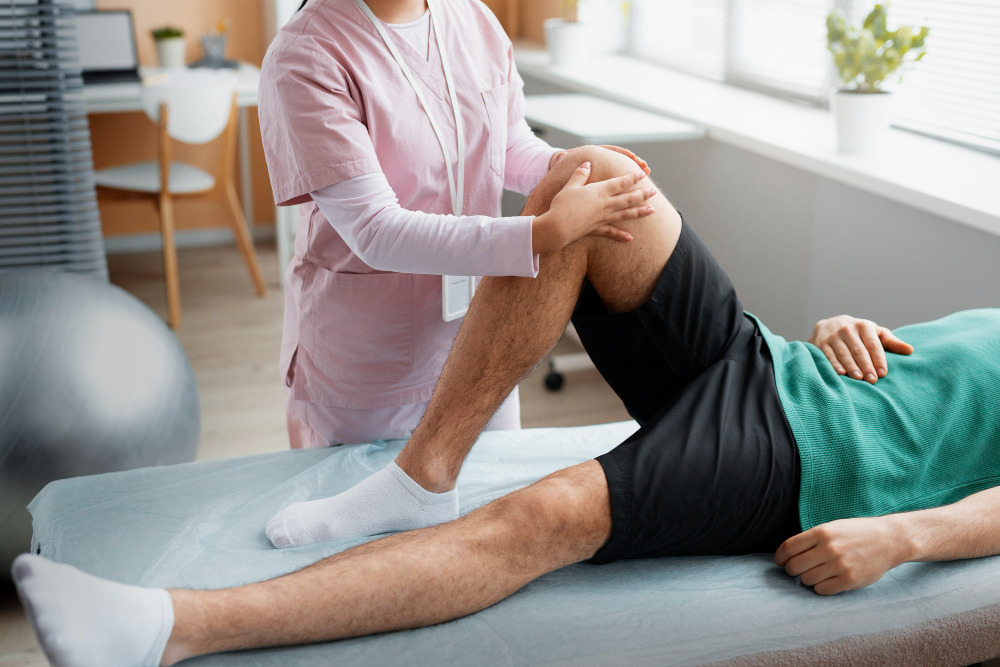
Physiotherapy is a key part of recovery after a knee ligament injury. Not only does it help reduce pain, but it also restores movement and strength. In many cases, physiotherapy for knee ligament injury recovery can prevent the need for surgery. Even after surgery, physiotherapy helps you regain full function. Here’s how it helps:
Because every injury is different, physiotherapists create a plan just for you. This plan changes as you heal.
Key Physiotherapy Techniques for Knee Ligament Injuries
Physiotherapists use many techniques to help you recover. For example, they may start with gentle exercises and progress as you get stronger. Some common techniques include:
As you improve, your physiotherapist will adjust your program. This ensures you keep making progress.
Tips for Safe Rehabilitation and Prevention
Recovering from a knee ligament injury takes time. However, you can speed up healing and avoid setbacks by following these tips:
Above all, listen to your body. If you feel pain or discomfort, tell your physiotherapist right away.
Conclusion
Knee ligament injuries can be tough, but with the right care, most people recover well. Physiotherapy is a safe and effective way to heal and regain strength. For the best results, start your rehabilitation after knee ligament tear as soon as possible. Consult a qualified physiotherapist at VEDYAS PHYSIO CARE for personalized knee injury rehabilitation advice.